
The fair market value of a donated cookie cutter is $0.5–$3 per item in 2026, depending on condition.
Kitchen Donation Values · Updated September 12, 2026
Cookie Cutter Donation Value: What Is It Worth in 2026?
The fair market value (FMV) of a donated cookie cutter ranges from $0.5 to $3 per item in 2026, based on ItsDeducted's valuation dataset and IRS fair market value principles.
Valuation data by ItsDeducted Team · Updated September 12, 2026
Based on aggregated U.S. resale-market prices and IRS Publication 561 fair market value principles. See how we calculate these values.
Donating more than this one item? Track your whole donation free.
ItsDeducted helps estimate fair market value and keep organized donation records.
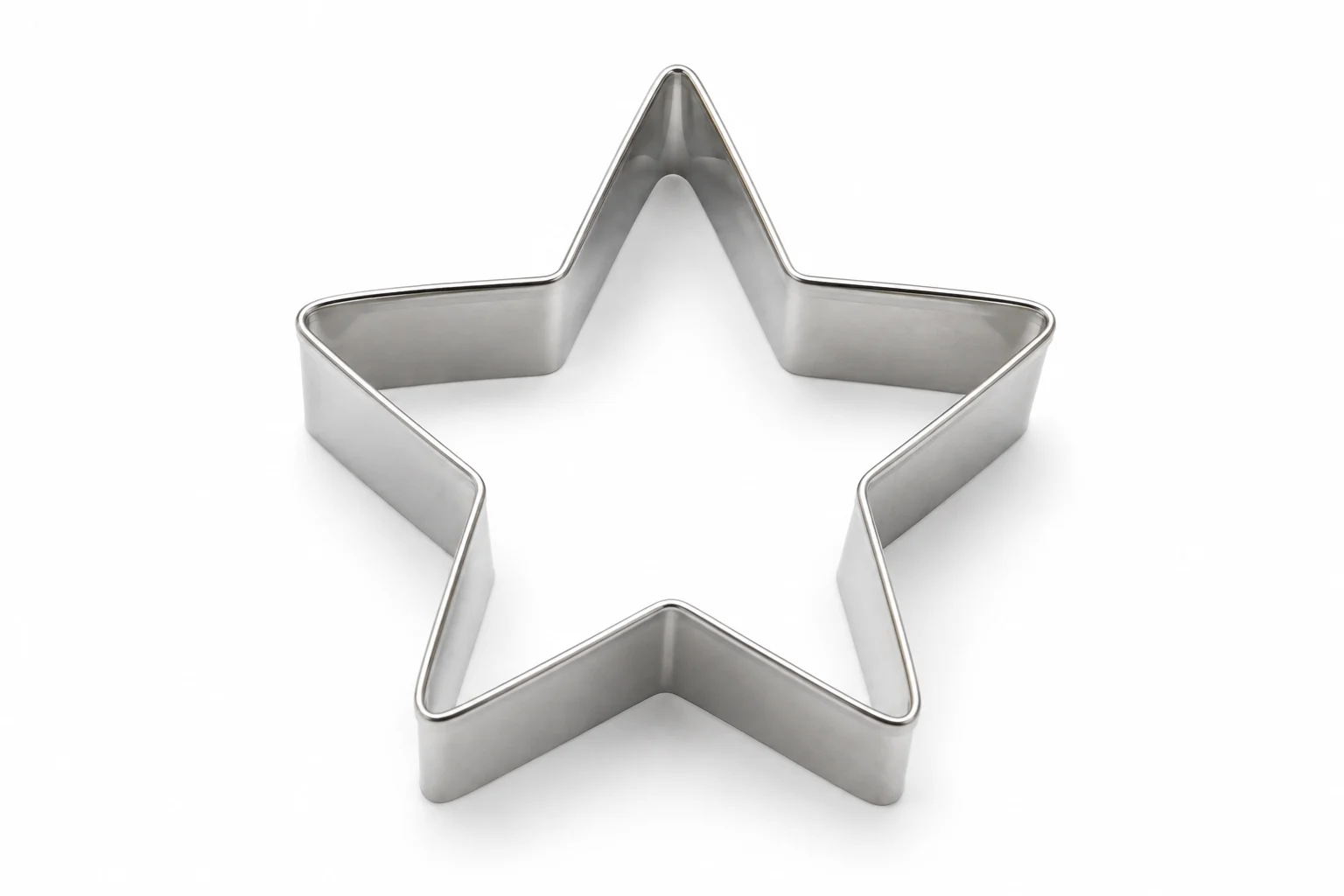
Cookie Cutter donation values are most impacted by structural integrity, surface finish, material composition, and set completeness.
A cookie cutter typically carries an estimated donation value between $0.5 for items in fair condition, $1.5 for those in good condition, and up to $3 for pieces in like-new condition. The presence of original branding or a specific seasonal design often influences this valuation, as unique shapes and high-quality stainless steel finishes are more desirable to future buyers than worn or rusted tin alternatives.
Cookie Cutter Donation Values
2026 Cookie Cutter Donation Values by Condition
Use the item's actual condition and relevant used-market prices to estimate fair market value at the time of donation, rather than its original purchase price.
| Condition | FMV per item | What it means | Tax note |
|---|---|---|---|
| New / Like New | $3 | A cookie cutter in this state remains shiny and free of any rust, residue, or surface scratches, often appearing as if it has never touched dough. Its edges are perfectly sharp and uniform, typically supporting around $3 in fair market value. | Condition may qualify |
| Good | $1.5 | Light use is evident through faint, superficial surface swirls, yet the metal or plastic edges remain pristine and completely free of oxidation. This condition reflects a well-cared-for kitchen tool that typically supports around $1.5 in fair market value. | Condition may qualify |
| Fair | $0.5 | Visible surface oxidation or minor structural warping along the cutting edge characterizes a piece that has seen frequent use. While the shape is still recognizable and functional for baking, the cosmetic wear and potential for discoloration place it in this lower tier. | Check the IRS condition rule |
| Poor | $0 | Deep rust, heavy dings in the metal, or significant plastic degradation render the item marginal for reuse in food preparation. A cookie cutter showing these signs of decay is often considered near the end of its useful lifespan and may not be suitable for resale. | Generally below the condition rule |
These are estimated values, not deductible amounts. For clothing and household items, the IRS generally requires good used condition or better; a narrow exception may apply to a single item with a qualified appraisal and claimed value over $500.
Cookie Cutter Value Factors
What Affects the Value of Donated Cookie Cutters?
Not all donated cookie cutters are worth the same. These factors have the biggest impact on FMV:
Minor structural warping along the cutting edge characterizes a piece that has seen frequent use and results in a fair market value of approximately $0.5.
Light use is evident through faint superficial surface swirls while the metal edges remain pristine and free of oxidation to support a fair market value of $1.5.
High quality stainless steel constructions that are completely free of oxidation or pitting often command the upper tier value of $3 compared to basic stamped tin options.
Cookie cutters provided as part of a themed set or a full nesting collection retain higher desirability and value than loose individual pieces.
Items free of baked-on debris or hidden residues in crevice areas are viewed as kitchen-ready and command the premium $3 valuation for like-new condition.
Cookie Cutter Condition Issues
Common Condition Issues and How They Affect Value
Before donating a cookie cutter, check for these issues. Each may change the condition tier and estimated fair market value.
| Issue | Effect on Value | What to Do |
|---|---|---|
| Surface Oxidation | Lowers value | Minor discoloration or light rusting on the metal surface may affect appearance but the cutter remains functional for baking. |
| Structural Warping | Lowers value | A slight bend or distortion in the metal shape makes the resulting cookie less uniform but does not prevent the item from being used. |
| Deep Rusting | May eliminate value | Significant corrosion on the cutting edge poses a food safety risk and renders the item unsuitable for further kitchen use. |
| Heavy Dings | May eliminate value | Large dents or deep structural damage prevent the cutter from maintaining its intended shape and ensure uneven results. |
| Degraded Plastic | May eliminate value | Brittleness or cracking in plastic cookie cutters indicates material fatigue that may lead to broken pieces entering the food supply. |
Cookie Cutter Brand Value
Does Brand Name Affect the Value of Donated Cookie Cutters?
A cookie cutter generally does not command a higher valuation based on the manufacturer, as its resale potential is driven almost entirely by the shape's uniqueness, material durability, and freedom from rust or food residue. Because these tools are functionally simple implements, their market worth is determined by whether the cutting edge is sharp and intact rather than any specific logo stamped on the metal or plastic. You will find that the complexity of the design and the overall condition of the form are the primary factors that influence how a shopper perceives the value of a cookie cutter.
No Spreadsheets Needed
Add your cookie cutter, review its estimated fair market value, and keep the details together for tax time.
Start Tracking FreeWe donate things all the time, but keeping track of everything was a hassle and often just didn't get done. I was skeptical, but the first time I took a photo of a pile of items, I was surprised by how well it identified everything and how quickly I had everything saved and valued.
Fair Market Value Methodology
How We Calculate These Values
ItsDeducted's fair market values are built from a regularly updated dataset of resale prices across thrift stores, resale platforms, and charity shops nationwide. We apply IRS fair market value principles (IRS Publication 561) to map those prices to four condition tiers.
For a donated cookie cutter, our 2026 dataset yields a fair market value range of $0.5–$3 per item across condition grades.
- We aggregate resale pricing signals for Cookie Cutters across major thrift channels.
- We apply condition-tier adjustments consistent with IRS FMV guidance.
- We review and update our dataset regularly — the last date that fair market value data was updated is included on every page.
- Our values reflect the U.S. national average. Local thrift store prices may vary. The IRS expects you to use prices representative of your area.
Pricing year: 2026 — Cookie Cutter Fair Market Values Last Updated: September 12, 2026.
These estimates use the fair market value principles in IRS Publication 561. They are not IRS-issued values. Local resale prices, item details, and the donation date can change the appropriate estimate. For a claimed deduction over $5,000 for an item or group of similar items, a qualified appraisal is generally required.
For broader context on the goods people documented, read the 2026 ItsDeducted Donation Value Report. Its anonymized platform snapshot is separate from this item-specific estimate.
Donation Tax Rules
IRS Rules for Donating Cookie Cutters
For clothing and household items, the IRS generally requires good used condition or better. An exception may apply to a single lower-condition item when the claimed deduction exceeds $500 and is supported by a qualified appraisal and Form 8283. IRS Publication 561
Condition requirement
Estimate value from the item's actual condition on the donation date. Clothing and household items generally must be in good used condition or better to support a deduction, subject to the qualified-appraisal exception noted above.
Written acknowledgment
If you claim a deduction of $250 or more for a contribution, keep a contemporaneous written acknowledgment from the charity. Keep reliable written records for smaller contributions too.
Form 8283 (over $500)
If your claimed deduction for noncash contributions exceeds $500, generally attach Form 8283 to your return. The details and appraisal rules depend on the property and claimed amount.
Qualified charity
Charitable deductions generally require donations to qualified organizations. Many national thrift charities may qualify, but verify the receiving organization and keep your receipt.
What to save in your records
- Donation date and receiving organization.
- Item description: cookie cutter, quantity, and condition.
- Estimated fair market value used for each condition tier.
- Receipt, written acknowledgment, photos, or notes that support the estimate.
IRS reference: IRS Publication 561 explains how to determine fair market value. IRS Publication 526 explains charitable contribution recordkeeping and substantiation. Donors should document the item, its condition, and how they arrived at the estimate. Read IRS Publication 526 for substantiation rules.
Cookie Cutter Donation Acceptance
What Charities Typically Accept for Cookie Cutters
Acceptance of a cookie cutter often depends on its ability to safely handle food, meaning items must be completely free of food residue, deep rust, or significant metal degradation. Structural integrity is paramount, as a cookie cutter with heavy dings, significant warping, or compromised edges may be rejected due to potential safety risks or inability to maintain a clean shape. While many charities may accept clean, pristine stainless steel options, items showing visible oxidation or structural fatigue are typically valued very conservatively or considered unsuitable for reuse. Please check the charity's current guidelines to ensure your specific item meets their local health and safety standards for kitchenware.
FAQ
Frequently Asked Questions for Cookie Cutter Donations
How does the condition of a cookie cutter's metal or plastic edges affect its estimated donation value?
A cookie cutter with perfectly sharp, uniform edges and no oxidation may support an estimated value of $3 in like new condition. If the item shows visible structural warping or surface oxidation from frequent use, it is typically valued at around $0.5 in fair condition. Items with heavy dings or significant degradation are often considered to have reached the end of their useful lifespan for food preparation.
Does the material quality or presence of rust influence the fair market value of a cookie cutter?
Yes, surface oxidation significantly impacts valuation because it affects the item's safety and utility in food preparation. A cookie cutter that is shiny, free of rust, and without surface scratches reflects the highest valuation tier of approximately $3. Conversely, deep rust or heavy dings reduce the item to a poor condition state, which may limit its suitability for resale.
What factors determine if a cookie cutter is in good condition for donation?
A cookie cutter in good condition shows only faint, superficial surface swirls from light use, while the metal or plastic edges remain completely free of oxidation. This level of care typically supports a fair market value of $1.5. If the item shows signs of deep rust or significant plastic degradation, it no longer meets the criteria for a good condition classification.
Are there specific cleanliness standards for donating a used cookie cutter?
Charities prioritize cookie cutters that are free of food residue, discoloration, and structural damage to ensure they are safe for future use. A piece that is clean and appears as if it has never touched dough may be valued at $3, whereas a piece requiring significant cleaning or suffering from structural wear may only support a value of $0.5. Ensuring the item is sanitized before donation helps maintain its utility for the recipient.
Does the brand of a cookie cutter significantly increase its fair market value?
For cookie cutters, brand sensitivity is generally low, meaning the condition of the metal or plastic is the primary driver of value. Whether the item is a generic shape or a branded set, its market value is determined by its ability to perform its function without warping or rusting. Prioritize donating items that are structurally sound and free of heavy damage rather than focusing on the manufacturer.
Don't Leave Money on the Table
Your cookie cutter donation may have an estimated value of $0.5–$3
Review the condition, save the details, and keep your records organized in ItsDeducted.
Start Tracking FreeNeed more? ItsDeducted Pro is $2.50 / month, billed annually at $29.99.